
Advanced Care for Heart Rhythm Disorders
Treating abnormal heart rhythms with precision-guided technology, expert electrophysiologists, and comprehensive cardiac care.
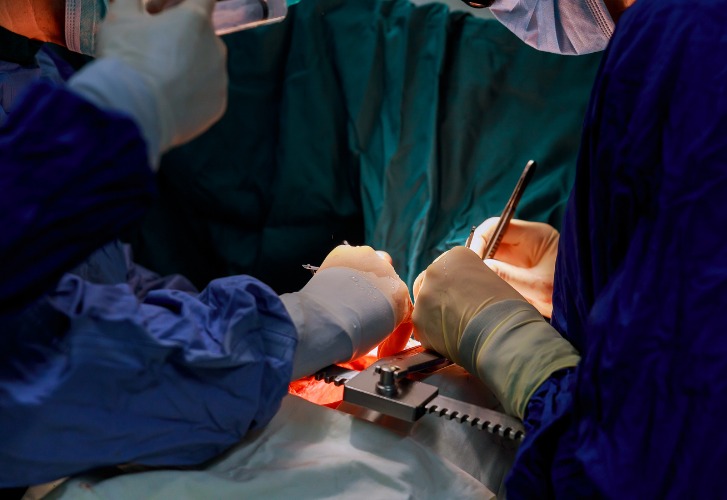
Radio Frequency Ablation Explained
Radio Frequency Ablation is a minimally invasive procedure used to treat abnormal heart rhythms by targeting and eliminating faulty electrical pathways in the heart. Thin catheters are guided through blood vessels to the heart, where controlled radiofrequency energy is delivered to correct the source of the arrhythmia.
RFA is commonly recommended for conditions such as supraventricular tachycardia, atrial flutter, atrial fibrillation, and other rhythm disorders. At St. Thomas Heart Centre, RFA procedures are performed by experienced electrophysiology specialists using advanced mapping systems for accurate and safe treatment.
Why Radio Frequency Ablation?
- Recurrent Palpitations or Rapid Heartbeat: Frequent or severe episodes affecting daily activities and quality of life.
- Supraventricular Tachycardia (SVT):. Abnormally fast heart rhythm originating from the upper chambers of the heart.
- Atrial Fibrillation or Atrial Flutter: Irregular or rapid heart rhythms increasing the risk of stroke and heart failure.


Why Choose St. Thomas Heart Centre for RFA Care
At St. Thomas Heart Centre, precision, safety, and rhythm control define our ablation services. Our electrophysiology teams work in close coordination to deliver effective treatment with minimal discomfort and faster recovery.
With advanced technology and patient-centred care, we aim to restore normal rhythm and improve long-term heart health.
01. Experienced Electrophysiology Specialists:
Highly trained cardiologists with extensive expertise in complex ablation procedures.
02.Advanced Electrophysiology Labs:
State-of-the-art mapping and navigation systems for precise arrhythmia localisation.
03.Minimally Invasive Treatment:
Catheter-based approach with no open surgery and reduced recovery time.
04. High Success Rates:
Proven outcomes for many common rhythm disorders.
05. Comprehensive Follow-Up Care:
Post-procedure monitoring, rhythm assessment, and long-term management planning.
Radio Frequency Ablation Should Not Be Delayed: Why
Delaying treatment for abnormal heart rhythms can lead to serious and progressive complications.
- Increasing frequency of palpitations
- Worsening breathlessness and fatigue
- Higher risk of stroke and heart failure
- Decline in heart function
- Reduced quality of life
- Limited treatment effectiveness if delayed
- Early RFA intervention can restore rhythm stability and prevent complications.
Make an appointment
Your RFA Journey: Evaluation to Recovery
Our RFA care pathway is designed to ensure safety, clarity, and confidence throughout the treatment process.
Initial Rhythm Assessment
ECG, Holter monitoring, echocardiography, and clinical evaluation.
Electrophysiology Study
Detailed electrical mapping to identify the source of arrhythmia.
Pre-Procedure Preparation
Medication review, fasting guidance, and patient counselling.
RFA Procedure
Performed using catheter-based techniques with real-time mapping guidance.
Post-Procedure Monitoring
Observation of heart rhythm, access-site healing, and overall stability.
Recovery & Long-Term Follow-Up
Gradual return to activities, medication adjustments, and regular rhythm check-ups.
Our Doctors

FAQ About Radio Frequency Ablation
1.How long does an RFA procedure take?
The procedure usually takes 2–4 hours. Duration depends on the type and complexity of arrhythmia.
2. Is Radio Frequency Ablation safe?
Yes, RFA is a well-established and safe procedure. Risks are low when performed by experienced specialists.
3. How long is hospital stay after RFA?
Most patients are discharged within 1–2 days. Your doctor will guide based on your recovery.
4. Will I still need medications after RFA?
Some patients may need medications temporarily. This depends on how your heart rhythm responds.
5.Can arrhythmia return after RFA?
While success rates are high, arrhythmias can recur in some cases. A repeat procedure may be needed.
6. When can normal activities be resumed after RFA?
Most patients return to daily activities within a few days. Follow your doctor’s advice for safe recovery.