
Advanced Coronary Diagnostic Care
Delivering precise heart vessel assessment through advanced imaging, expert cardiologists, and world-class cardiac infrastructure.

Understanding Angiogram
An Angiogram is a specialised diagnostic procedure used to visualise the blood vessels of the heart and identify blockages or narrowing that may affect blood flow. A contrast dye is injected through a thin catheter, and X-ray imaging captures detailed views of the coronary arteries.
Angiograms play a crucial role in diagnosing coronary artery disease, evaluating chest pain, and guiding further treatment decisions.At St. Thomas Heart Centre, our experienced cardiology team performs Angiograms using advanced imaging technology, ensuring accuracy, safety.
When Do You Need an Angiogram?
- Chest Pain or Discomfort:Persistent or unexplained chest pain that may indicate reduced blood flow to the heart.
- Suspected Coronary Artery Disease: Symptoms such as breathlessness, fatigue, or abnormal stress test results requiring detailed vessel evaluation.
- Heart Attack or Warning Signs: IEmergency assessment to identify blocked arteries and guide immediate treatment.


What Sets St. Thomas Heart Centre Apart in Angiogram Care
At St. Thomas Heart Centre, accuracy, safety, and patient reassurance form the foundation of our angiography services. Our skilled cardiologists and technical teams work together to deliver reliable diagnostic results with minimal discomfort.
Driven by clinical expertise and patient-focused care, we ensure timely diagnosis that supports effective treatment planning and long-term heart health.
01. Experienced Interventional Cardiologists:
Highly trained specialists with extensive expertise in diagnostic and interventional cardiology.
02. Advanced Cath Lab Technology:
Modern cath labs with high-resolution imaging for clear and precise artery visualisation.
03. Patient-Centred Approach:
Careful explanation, gentle techniques, and continuous monitoring throughout the procedure.
04.Minimally Invasive Technique:
Small catheter entry, reduced discomfort, and quick recovery.
05. Comprehensive Reporting & Guidance:
Clear results interpretation and treatment recommendations following the Angiogram.
Why Timely Angiogram Matters?
Delaying diagnosis of coronary artery disease can lead to serious and life-threatening complications.
- Worsening chest pain and breathlessness
- Increased risk of heart attack
- Reduced oxygen supply to heart muscle
- Sudden cardiac events
- Delayed treatment options and outcomes
- Early Angiogram evaluation allows timely intervention and better heart protection.
Make an appointment
Angiogram: What to Expect
Our Angiogram pathway is designed to ensure clarity, safety, and comfort at every step of care.
Initial Consultation
Clinical evaluation, symptom assessment, ECG, blood tests, and imaging review.
Procedure Planning
Review of medical history, medications, and risk factors before scheduling the Angiogram.
Pre-Procedure Preparation
Fasting guidance, medication adjustment, and patient counselling.
Angiogram Procedure
Performed using catheter-based techniques under local anaesthesia in a sterile cath lab.
Post-Procedure Monitoring
Observation for access-site safety, heart rhythm, and overall stability.
Recovery & Follow-Up
Discharge guidance, lifestyle advice, medication planning, and further treatment recommendations if needed.
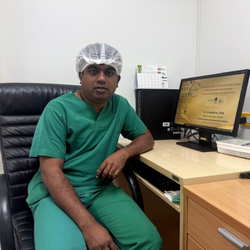
Our Doctors

Frequently Asked Questions
1.How long does an Angiogram procedure take?
The procedure usually takes 30–60 minutes. Duration may vary depending on individual findings and complexity.
2. Is an Angiogram painful?
Most patients feel minimal discomfort. Local anaesthesia ensures the procedure is generally comfortable.
3. How long is hospital stay after an Angiogram?
Many patients can go home the same day or within 24 hours. Your doctor will advise based on your condition.
4. Are there risks associated with Angiogram?
Angiograms are generally safe. Risks are low when performed by experienced specialists.
5. Can normal activities be resumed after Angiogram?
Light activities can usually be resumed within a day. Follow your doctor’s guidance for full recovery.
6. Does everyone with chest pain need an Angiogram?
Not everyone requires it. The need depends on symptoms, test results, and clinical evaluation.